🇺🇸 CIA
Gagarin and Soviet Spaceflight Rumors
Summary
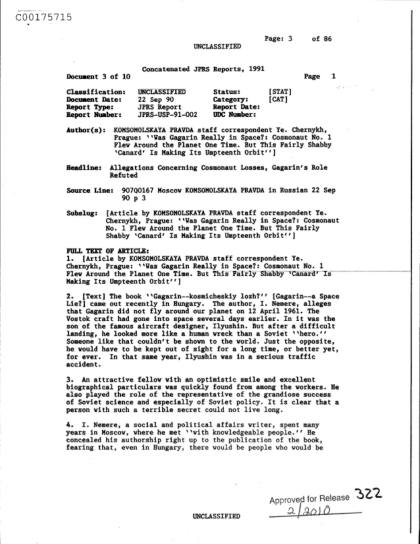
In 1990, a Hungarian book sparked controversy by suggesting that Yuri Gagarin was not the first man in space. The author, I. Nemere, claimed the historic mission on April 12, 1961, was actually carried out by Vladimir Ilyushin, whose alleged crash landing supposedly kept him hidden from the world. This theory, though disputed since, raised questions about Soviet transparency in space achievements. The Soviet press and its allies quickly responded, defending the authenticity of Gagarin's flight and discrediting the rumors as part of an anti-Soviet campaign.
Karel Patsner, a Czechoslovak journalist specializing in space issues, joined the defense of Gagarin, arguing the rumors lacked foundation. According to Patsner, informants of the time, including scientists and cosmonauts, never mentioned tragedies in earlier flights. He also highlighted that U.S. intelligence data showed no evidence of secret Soviet missions with losses. Despite efforts to debunk the accusations, the debate persisted, fueled by conspiracy theories and the lack of official Soviet information. Gagarin's case remains a symbol of the space race, but also a reminder of how myths can endure even in the information age.